.jpg)
Jaguar E - 60 years
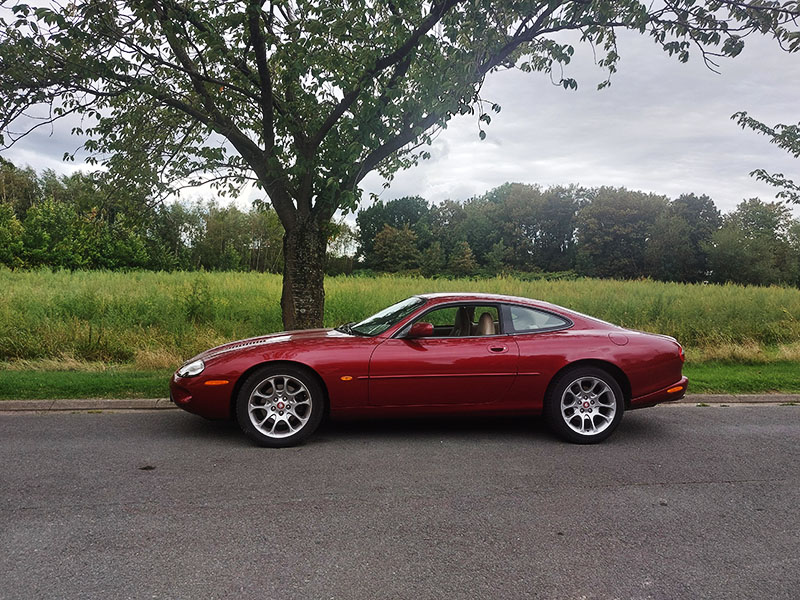
There are cars that make you want to attack every corner you see, and then there is this Jaguar XKR, a 1999 4.0 in Carnival Red with a cream interior. She makes a rather convincing argument that speed is best enjoyed while sitting back and looking faintly aristocratic.
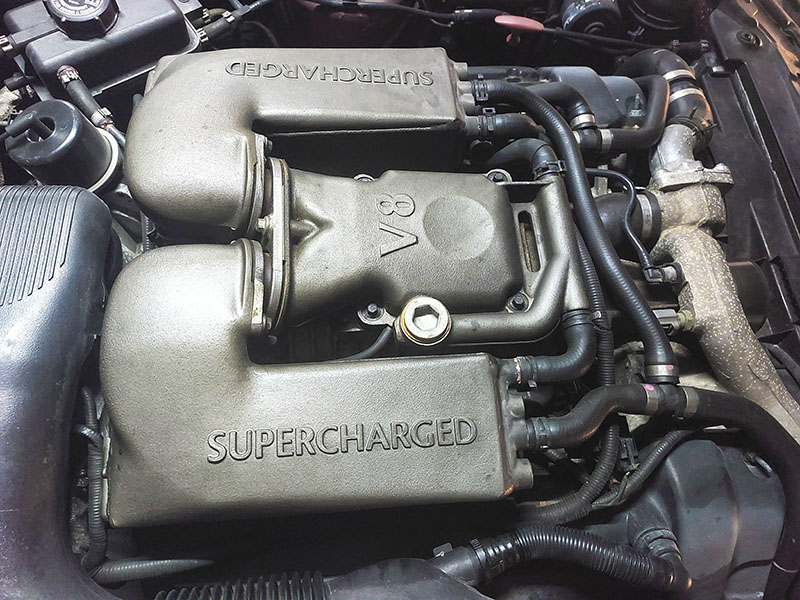
The XKR was Jaguar’s answer to the fast GT problem of the late 1990s: take the already rather elegant XK8, add a supercharged 4.0-litre V8, and give it enough torque to make the rear tyres question their career choices. It works. The engine is powerful, smooth and wonderfully sweet, with an almost absurd abundance of torque. Just feather the throttle and the rear wheels are perfectly happy to spin. Apparently traction control was considered a form of optional entertainment.
The overkill attitude is matched by the brake booster, which is perhaps a little too enthusiastic — the brakes are heavily assisted and require a rather delicate touch.
This particular car, with less than 100k original kms on the clock, is mainly used for brief trips from our base near Brussels, which suits it rather well. She is fundamentally a very powerful cruiser rather than a sports car. On a motorway it settles into its stride effortlessly, and the Mercedes "5G-Tronic" automatic transmission is pleasant and perfectly adequate for the job. Overtaking requires remarkably little planning: there is always another wave of torque waiting.
Unsurprisingly with this package, fuel consumption ranges from high to outrageous depending on your driving style.
The 18-inch wheels look particularly good, too. They give the car a suitably serious stance without making it look like someone has fitted aftermarket jewellery to an old Jaguar.
Inside, there is leather. Lots of it. And wood, naturally, because apparently no Jaguar of this period was considered complete without enough timber to furnish a small study. The cream interior looks lovely, although the cabin is surprisingly cramped. Quality is reasonable rather than exceptional, and the ergonomics are, generously speaking, eccentric. Switches seem to have been distributed around the dashboard according to a system known only to Jaguar's interior department. Not to mention the handbrake on the far left, out of the passenger's reach.
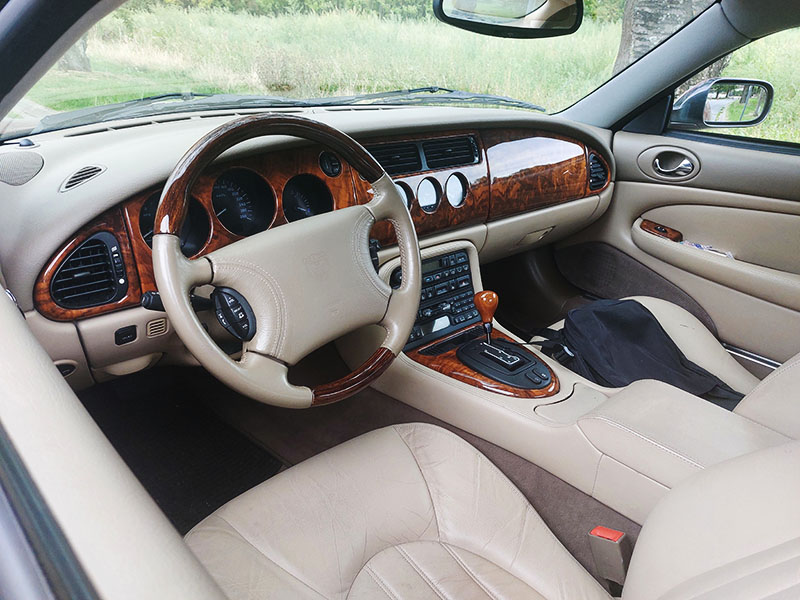
The driving position is less convincing. The seat sits too high, headroom isn't exactly generous even for an average-sized person, and the steering wheel remains oddly low even after adjustment. On the positive side, the pedals are very well placed. Visibility is generally fine, although the small rear window makes reversing feel rather more like a calculated exercise in faith.
The dashboard itself is nicely laid out and has all the instruments one could reasonably want, including the wonderfully old-fashioned voltmeter. Because obviously knowing exactly how enthusiastic the alternator is feeling is important information.
The boot is actually more than adequate for a car of this type, and there is a proper emergency spare wheel. So despite the cramped cabin, the XKR is quite capable of swallowing luggage for a weekend away.
The steering is extremely light and pleasant at low speeds, which makes the car easy to manoeuvre around town. At Autobahn speeds, however, there isn't much feeling coming back through the wheel. It all becomes a little remote — appropriate, perhaps, for a car whose primary purpose is covering ground rather than attacking it.
And that's really the point of the XKR. She is not a sports car, despite the supercharged V8, the wide tyres and the rather serious-looking stance. She is a capable, fast GT for two people, preferably travelling somewhere pleasant and without feeling the need to prove anything.
A slightly cramped, slightly eccentric, wonderfully torquey British grand tourer — with an automatic gearbox, cream leather and enough power to make every traffic-light departure unnecessarily interesting.

Jaguar E - 60 years
.jpg)
SS100 Jaguar 2 1/2 Litre
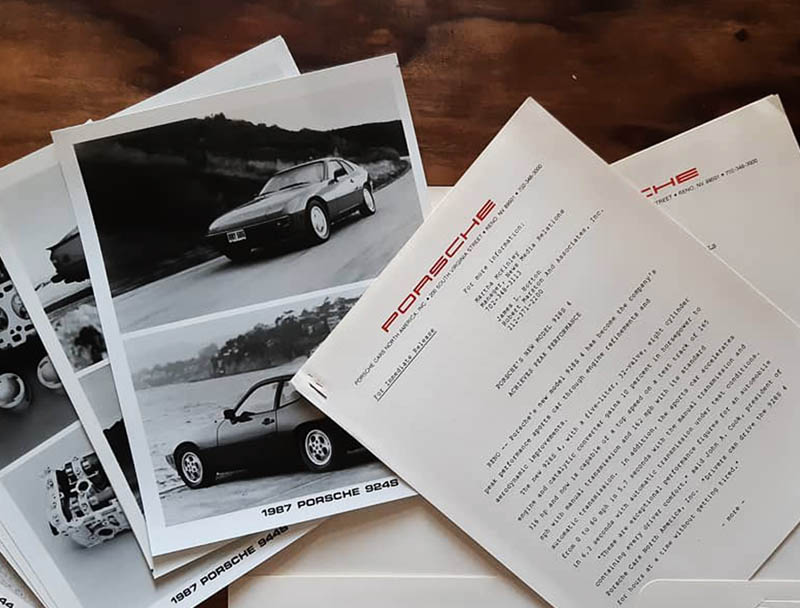
Porsche Press kit
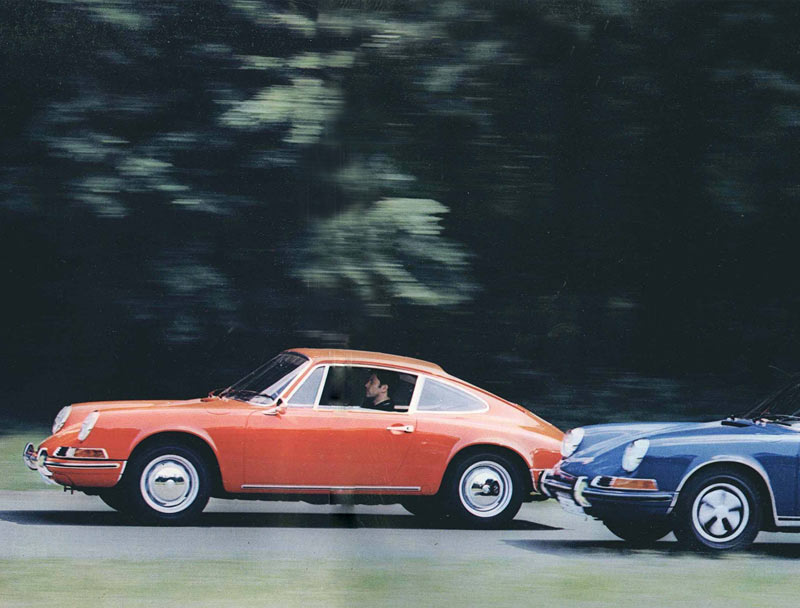
Porsche Literature
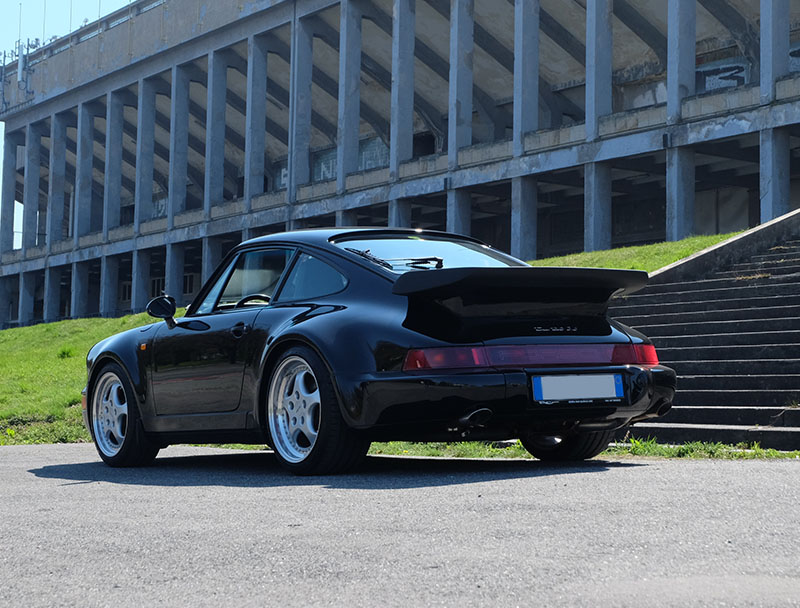
Our Porsche Cars