From 1963 to 1973, the Porsche 911 paint data plate location remained consistently on the driver's side A-pillar/door jamb, but the content of the code on the plate changed in the 1972 model year, adopting a new numbering system.
The method of indicating the body colors on the paint data plate evolved as such:
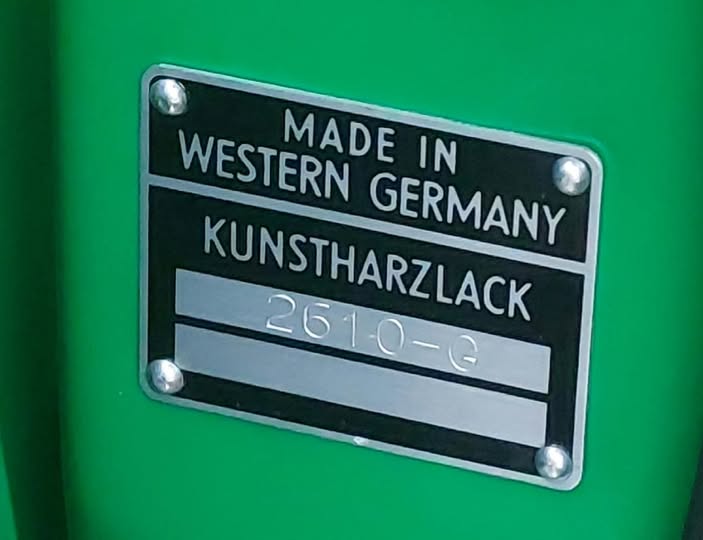
- 1963–1971: Paint codes typically consisted of a combination of numbers and letters, often followed by a suffix to denote the paint manufacturer (e.g., G for Glasurit, H for Herbol, L for Lechler). The format could look something like "8080-H" for silver metallic paint.
- In the 1972-73 Porsche 911 system, paint codes were typically a three-digit number in the format xxx-y-z, where each part of the code specified the color, application location, and paint manufacturer.
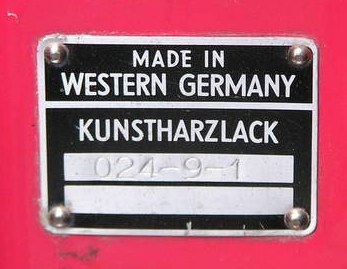
The format breaks down as follows:
- xxx = (Color Code Number): The first three digits correspond to a specific color designation (e.g.,131 for Light Ivory).
- y = (Place of Application/Factory Code): The middle digit identified where the car was painted.
- 9: Porsche factory in Stuttgart-Zuffenhausen.
- 8: This digit indicates an alternate paint application facility or coachbuilder. By 1973, Karmann (an earlier builder) was no longer in the code scheme. The use of '8' is particularly common on 1973 Carrera RS models, leading many to associate this code with the specific facility used for the RS production run, although it wasn't a separate physical factory building in the modern sense. .
- z = (Paint Supplier Code): The last digit indicated the specific paint manufacturer (supplier) that produced the paint.
- 1: Lesonal.
- 2: Glasurit.
- 3: Herberts (now BASF).
.jpg)