.jpg)
ESR Rally 2015
There are car events you attend, and then there are places you feel. The Strähle Swap in Fellbach belongs to the second category.
No velvet ropes. No influencer paddocks. No polished corporate spectacle. Just cold November air, the smell of coffee and old paper, conversations spoken in German, French, Italian, English, and row after row of Porsche history spread across tables inside an old timber-framed hall outside Stuttgart.
Enthusiasts once again gathered at the historic Alte Kelter in Fellbach, turning one of Europe’s most respected Porsche swap meetings into what felt less like a market and more like a pilgrimage. Because if Porsche has a secret language, this is where people still speak it fluently.
At Strähle, the day starts early. Really early. By sunrise, the parking areas were already filling with air-cooled machinery arriving from every direction — German plates mixed with Dutch, Swiss, Belgian, British, Czech and Italian registrations, proof that some enthusiasts had crossed borders not for speed, but for something much harder to find: authenticity. Inside, the atmosphere was impossible to fake. A faded motorsport poster from the 1970s leaning against crates of carburettor parts. Shelves full of workshop manuals. Boxes containing obscure trim pieces that only a longhood 911 owner could identify in half a second. Rare brochures. Dealer signs. Literature yellowed by time. Forgotten treasures waiting for the right owner to recognise their value. You don’t simply shop at Strähle. You search. And sometimes, if luck is on your side, you find the one missing piece your restoration has been waiting years for.
The real magic of Strähle has never been about buying things. It is about the people. Spend ten minutes at a random table and chances are someone will start telling a story. A former mechanic remembers working on early cars when they were still “just used Porsches.” A collector debates originality over coffee. A 356 owner explains why he drove eight hours through the rain because “you never know what might turn up.” The bearded, smiley guy next to you with diving into a stash of greasy, dirty parts might well be a Swedish billionaire also looking for small treasures.
There is no rush here. No algorithm. No “Buy Now” button. Just experience exchanged between generations of enthusiasts who care deeply about keeping Porsche history alive. And in a world where so much automotive culture now exists behind phone screens, that feels increasingly rare.
.jpg)
What makes Strähle special is that it still feels stubbornly real. The event — inspired decades ago by the Porsche and Volkswagen swap culture of Southern California — has grown into one of Europe’s most important Porsche gatherings without losing the soul that made it special in the first place.
You won’t find polished luxury branding everywhere. What you will find are conversations about magnesium engine cases, impossible-to-source trim, Fuchs wheels, forgotten racing stories, and the quiet excitement of spotting something truly rare sitting unnoticed in a cardboard box. For many visitors, the Fellbach weekend has become tradition — often paired with trips to Stuttgart, museum visits, or simply long drives through Germany in cars that were built to be used, not hidden. And maybe that is the point.
Strähle reminds us that Porsche culture was never only about horsepower. It has always been about preservation. About obsession. About memory.
Why Strähle Still Matters?
In 2025, when nearly everything can be bought online with a few clicks, a place like Strähle feels almost rebellious. Because here, value is not determined by an auction algorithm. It lives in conversations. In provenance. In stories passed from one owner to another. And perhaps that is why people keep coming back to Fellbach every November. Not only to buy. But to belong. To a culture that still values mechanical honesty, deep knowledge, and the strange joy of waking up before dawn to hunt for something only a Porsche person would understand.
At Strähle, history does not sit behind glass. It changes hands.
.jpg)
The Straehle Swap A swap is a swap is a swap. You got swapped... Swap me if you can! A swap is a swap is a swap. There was a time before the internet, before CAD, and before mobile phones. Business was done in analogue. A fax machine, alongside a landline, was the fastest way to communicate. Annual fairs and meetings were a fixture in any industry's calendar, including those for memorabilia and model collectors. Some of us remember this period as being from a time long before the Space Age. Space was vast, time was flexible and Porsche enthusiasts were in a class of their own. The Straehle swap meeting originated in that 'pre-internet' era at the gatherings and meetings of the 'Porsche Modell Club', which was founded in Duisburg by the renowned racing expert, photographer, and model builder, Ulrich Upietz, in 1978.
His annual publication of the “Porsche Sport” compendium, the book “Porsche 911 in Racing”, the “Porsche 956/962” edition, and the title “Porsche Toys and Miniatures, Design Studies and Wind Tunnel Models”, as well as other specialised Porsche books, secured him a place in our libraries. The 'Porsche Modell Club', whose members included former factory employees, was very active. There were newsletters, flyers, organised meetings, events and swaps in Aachen and at the Nürburgring. In the '80s and '90s, the 'Porsche Modell Club' offered a unique opportunity to connect with fellow collectors and marque enthusiasts from Europe and beyond. The club was immediately recognised by Porsche AG, and from 1981 onwards it was officially part of the Porsche club world. Ulrich Upietz had the brilliant idea of publishing small booklets containing photos of model cars from several collections, alongside the story of the real vehicle. The first edition, published in 1983, was themed around the 20th anniversary of the 911. The second release was about the 'Porsche Martini' sponsored cars. In total, about a dozen booklets were produced, all focusing on interesting, rare and lesser-known topics.
In 1985, Ulrich Upietz started collaborating with the Marseille-based modelling company 'Starter', commissioning limited editions of hand-built 1:43 scale models for the 'Porsche Modell Club', including the 1964 Targa Florio winner, the 904-005; the 908/3 driven by Egon Evertz at Le Mans in 1976; and the 935 Carrera RSR Gelo. Notable models include the 944 Turbo Cup from 1987 featuring white and pink hieroglyphics, the 936C Group C car from 1986 and the Redman/Barbour/Newman 935 from Le Mans in 1978.
These were 'exclusive' and available only to members, coming in a specific PMC box. The dreams of all Porsche model car enthusiasts were realised, and from 1987 onwards, a handful of 'mechanics', led by Mr Jürgen Renardy, applied their 'model magic' to these various builds. These 'reunions' turned out to be 'Porsche automobilia heaven', and from the 10th anniversary edition in 1988, the meetings were also held in Stuttgart, just below the TV Tower.
Due to his increasing workload as a photographer and running his own publishing company, Ulrich Upietz handed over management of the PMC to Henk Koop. The club's headquarters moved to Emmen in the Netherlands. The printed newsletter was produced in Assen and the worldwide service and contact was extended from Germany to the Benelux countries, Scandinavia and the US. The annual club membership package included a quarterly newsletter and one Porsche model car. The Models now commissioned had been from other brands using diecast and small limited runs were ordered. Two veterans of the Porsche universe met at one of these events in Stuttgart. Marco Marinello and Paul Ernst Strehle Sr. Mr Marinello visited several venues and swap meets throughout the '80s and '90s — surely between 30 and 40 worldwide. In 2003, it was difficult to return to the same venue in Stuttgart for the PMC meeting the following year. Following discussions and suggestions, Mr Marinello and Mr Straehle senior met and Mr Straehle senior offered to host the next PMC swap at his company's large premises. The decision to relocate the venue to the Straehle company premises in Plüderhausen, near Schorndorf, was quickly made – surely with a smile. The date was set for 6 November 2004 and the '8th International PMC Porsche Winter Swap' was advertised as 'the world's largest Porsche model car and memorabilia swap meet'. This "New Edition" launched a separate market for spare parts and a parts swap for Porsche 4, 6, 8 and 12 cylinders, classic and new Porsche cars were also on display, marking the birth of the first Straehle swap meet.
Several hundred flyers were printed and invitations were sent out. 'VIPS' and 'friends of the house' were sent free entry tickets, a tradition that continued in subsequent years. Mr Marinello, his wife and Mr Straehle sen.'s secretary organised most of the event.
.jpg)
The Straehle Volkswagen workshop was located at the front of the large factory building. At the back, however, spanning over 1,000 m², was the large collection of Magirus trucks and other huge vehicles amassed by Mr Straehle jun. On Friday morning, Mr Straehle's nephews, friends and employees started removing the trucks and cars, cleaning the space and setting up the swap meet with 40–50 beer tables. The scheduled date was perfectly timed. It was a Saturday, one or two weeks before the first Sunday of Advent, with no other important shows, fairs or venues. The only issue was the temperature in the large workshop: the front part, where the memorabilia were displayed, could be heated up to a cosy 16 degrees Celsius, but the rest of the workshop was unheated and depended on the outside temperature.
After four years in Plüderhausen, a new location was found. The 'Galerie für Kunst und Technik' in Schorndorf was the perfect solution. The front part could be rented for a relatively small amount. The cars and motorcycles had been removed and covered, and a catering area had been set up at the front. Best of all, it was heated! Exhibitors from Germany, Austria, Switzerland, Italy, Belgium, the United Kingdom, the Netherlands and the United States offered a wide range of Porsche-related items. Porsche enthusiasts live by the motto 'find, buy, swap'. Spare parts, body parts, vehicle accessories, literature and model cars of all scales found interested buyers. The merchandise tables offered almost everything a Porsche fan could dream of: Porsche lettering and emblems; speedometers in every conceivable variation; service and operating manuals for almost all Zuffenhausen models; small and large spare parts; steering wheels; Christophorus magazines; books; stamps; pins; promotional items; and brochures (even for the 904 GTS and the Porsche 964 Speedster). There were also some very rare precision model cars.
At the 10th Strähle Porsche Swap in 2013, Automobilia Ladenburg organised a 'silent auction'. Fifty lots were put on display with a starting price of one euro. The highest bid won. In keeping with the PMC's tradition of commissioning an exclusive model for the meeting, Schuco had been tasked with presenting a 1/43 scale Porsche model at the venue for several years. In further keeping with tradition, several presidents of Porsche 356 clubs from across Europe were in attendance: Germany, England, the Netherlands, Italy and Switzerland. Former Porsche employees and friends of the brand also seized the opportunity to meet up again in Schorndorf and reminisce about old friendships.
Mr Straehle senior had invited the “who's who” of the Porsche universe, who regularly attended, and a special room had been set up for them. Among them were racing colleagues Jürgen Barth, Hans Herrmann, Herbert Linge, Eberhard Mahle and Juergen Neuhaus; engineers Peter Falk, former race director, Walter Näher, race engineer for the 917, 956 and 962 racing cars, Hans Mezger, engineer and former head of the motorsport department, Helmut Pietsch, former head of the engine department at Werk 1. The next move from the 'Galerie für Kunst und Technik' was inevitable, as the growing number of exhibitors and attendees made it necessary to expand. The swap grew from 30 to 90 participants, and a new location was found for the 11th event.
The Straehle Swap 2014 took place at the BarbaraKünkelin-Halle in Schorndorf. Although the venue normally hosts a variety of events, including concerts, theatre performances and cabaret, it was complicated to arrange a proper setup for all the exhibitors, tables and attendees due to its stage and stepped rows of seats. However, the pleasant catering area and ample parking around the venue made it easily accessible.
After three years, the swap moved again. Since 2017, the Porsche meeting has been held in Fellbach's “ Alter Kelter”, also known as the “Wooden Cathedral”, thanks to its impressive half-timbered construction. The huge 3,000-squaremetre site is an ideal location for the swap meet. Parking in the surrounding area remains somewhat problematic, but everything else is perfect. The day before the event, exhibitors can set up their stands and mingle at an internal dealer evening. Saturday's setup begins at 7 a.m., with the doors opening to visitors at 9 a.m. A tried-and-tested team is on hand to provide visitors and exhibitors with catering and drinks, serving small snacks and hot meals. As they do every year, groups of former Porsche employees met for an on-site gathering and technical discussion.
Among them was Hans Clausecker, who worked in chassis testing and tyre and wheel development. Peter Scharpf was responsible for endurance testing, while Otto Geffert impressed in the design studio with his excellent ideas. Harro Deutscher began his career as a test electrician before becoming a racing mechanic for Will Kauhsen. Last year, he completed a full overhaul of a Porsche 917/10 twin-turbo engine. Meanwhile, Helmut Pietsch designed brake systems, while Gudrun Gauza trained a considerable number of technical drafters before moving to axle development drawing control. Hartmut Kristen oversaw Porsche Automobil-Rennsport's operations as head of motorsport between 2014 and 2020. Kurt Wöhr worked as a chassis group master and then in the four-cylinder series. Gustav Nitsche worked in the racing department, where he was involved in building the 917. He later became renowned for restoring the 908–917 racing engines. He once reported that each frame was assembled by a single welder. There is said to have been a list. Otto Gütelhöfer was a vehicle designer. Valentin Schäffer, also known as 'Turbo Valentin', was a brilliant racing engine designer. Berthold Kleinbeck found fulfilment in the brakes department and testing. Wolf-Hendrik Unger was a race engineer for the Monte Carlo Rally and various other desert rallies in which Porsche participated. Mr Ruf also appeared on several occasions, as he remains well connected within the Porsche universe. All the questions from the interested and enthusiastic audience, as well as from authors of upcoming publications, who got in touch to arrange interviews for first-hand stories, had always been kindly answered. As a result, many autographs have been signed in Schorndorf over all these years. As time goes by, the number of first-hand witnesses to show up at the Straehle swap has declined. In the past, there would have been up to 40 employees, including drivers, mechanics, and engineers. Nowadays, this number has dwindled to maybe just a dozen. However, you can still meet the design legends Tony Hatter and Grant Larson today, and of course Mr. Marinello and his wife are still around, Mr. Straehle jun. took over from his father and continues the legacy of the Straehle Swap meet.
.jpg)
Thank you to Mr. Marinello for infos and some pictures, Thank you to Dirk and Massimo for pictures and your patience.
For more information, you may check the original post on the ESR forum.
ESR Rally 2015
.jpg)
Techno Classica Essen 2014
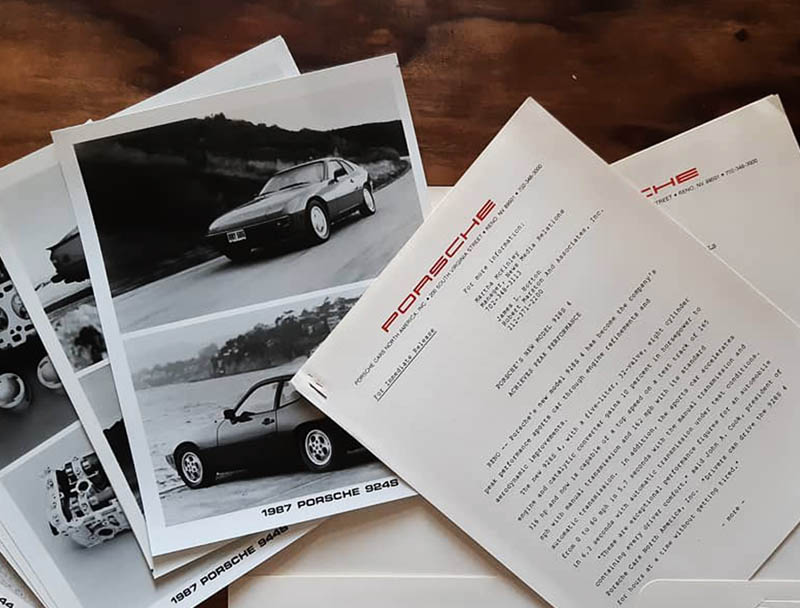
Porsche Press kit
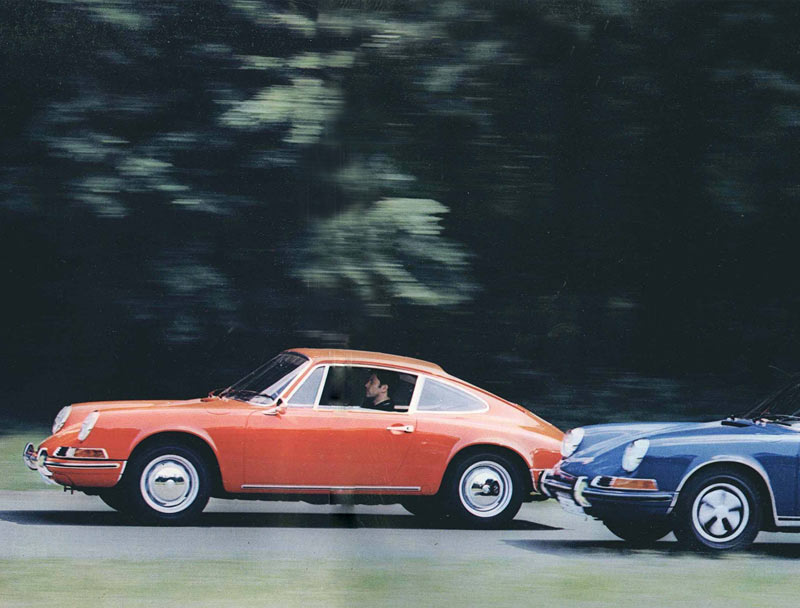
Porsche Literature
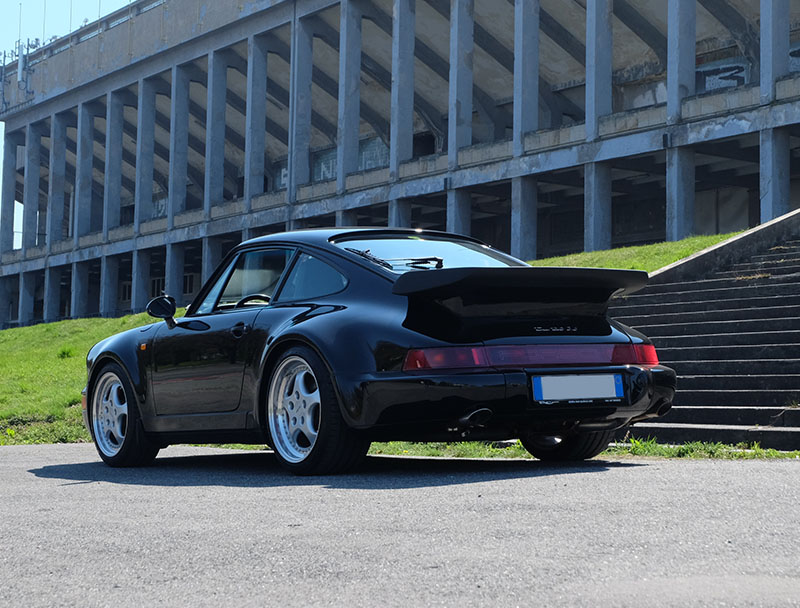
Our Porsche Cars